Currently: Q1, 2017 (Ends Sunday, November 21st at 11:59 PM EST (7 days)
Join our Discord server! See Discord icon under this banner!

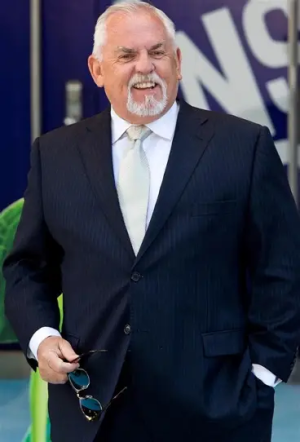
Press Office of Russell Pritchard (D-IN)

Pritchard Introduces $250 Billion American Infrastructure Renewal Act​

WASHINGTON — U.S. Senator Russell A. Pritchard (D-IN) today introduced the American Infrastructure Renewal Act of 2016, a five-year, $250 billion proposal to repair and modernize roads, bridges, drinking-water systems, railways, broadband networks, ports, airports, and the nation’s electrical grid.

Pritchard said the legislation is built around a simple principle: the federal government should take care of the infrastructure Americans already depend on before allowing it to deteriorate beyond repair.

“Anybody who has ever owned a house, run a business, or worked on a piece of equipment understands this,” Pritchard said. “You can fix something when it starts falling apart, or you can ignore it until the whole thing has to be replaced. The second option usually costs you a whole lot more.”

The legislation would provide $110 billion for roads and bridges, $35 billion for drinking-water and wastewater systems, $30 billion for passenger rail, freight rail and public transportation, $20 billion for rural broadband, $20 billion for ports, waterways and airports, $20 billion for the electrical grid and utility infrastructure, and $15 billion for competitive state and local infrastructure grants.

At least 20 percent of road and bridge funding would be reserved for rural communities and small towns.

“For too long, infrastructure conversations in Washington have acted like America stops when you leave the biggest cities,” Pritchard said. “A county road matters. A two-lane bridge matters. A town’s water system matters. A farmer or small business owner being able to get reliable internet matters. Those communities deserve a seat at the table too.”

The bill would establish a repair-first policy for discretionary federal infrastructure grants, directing agencies to prioritize the repair, replacement, and modernization of existing infrastructure before financing entirely new facilities.

Pritchard, who spent more than a decade as a Johnson County commissioner before entering the Senate, said his experience in local government heavily influenced the legislation.

“I spent years calling Indianapolis trying to get money for roads, bridges, water systems, and everything else counties are expected to keep running,” Pritchard said. “Local officials know what needs fixed. Most of the time, the problem is finding the money to actually fix it.”

The legislation would also expand technical assistance for small counties and municipalities that lack the staff or resources to navigate complicated federal grant applications.

The American Infrastructure Renewal Act contains Buy American provisions requiring federally funded projects to use domestically produced iron, steel, manufactured products, and construction materials where reasonably available.

“If we're going to spend American taxpayer dollars rebuilding America, I'd prefer those dollars support American workers,” Pritchard said.

The proposal also contains new accountability provisions requiring federal agencies to publicly report major awards, conduct audits, recover improperly spent funds, and withdraw funding from projects that fail to demonstrate reasonable progress.

Pritchard said infrastructure investment and fiscal responsibility should not be treated as opposing ideas.

“I'm not interested in writing a $250 billion blank check,” Pritchard said. “If we're spending this kind of money, taxpayers have every right to know where it went, what got built, and whether they got what they paid for.”

The legislation directs the Office of Management and Budget to develop financing recommendations using existing infrastructure revenues, elimination of duplicative programs, recovery of unpaid federal fees and taxes, appropriate public-private financing, and other savings or revenues approved by Congress.
The bill specifically prohibits the executive branch from using that provision to impose a new tax without congressional approval.

Pritchard called on members of both parties to work toward passage of the legislation.

“There isn't a Republican bridge and a Democratic bridge,” Pritchard said. “There are good bridges and bad bridges. There are roads that work and roads full of potholes. There are towns with clean water and towns worried about whether their pipes are going to hold up another twenty years.”

“This isn't supposed to be complicated,” he continued. “Fix what we've got. Build what we need. Hire American workers. Don't waste the money.”

Key provisions of the American Infrastructure Renewal Act:​

  • $250 billion over five years for national infrastructure investment;
  • $110 billion for roads and bridges;
  • 20 percent rural set-aside for road and bridge funding;
  • $35 billion for drinking-water and wastewater infrastructure;
  • $30 billion for rail and public transit;
  • $20 billion to expand rural broadband;
  • $20 billion for ports, waterways and airports;
  • $20 billion for electrical-grid modernization;
  • $15 billion in competitive grants for state and local governments;
  • a repair-first requirement for federal discretionary infrastructure funding;
  • Buy American requirements for federally funded projects;
  • assistance for small communities applying for federal infrastructure grants; and
  • enhanced auditing, public reporting and anti-waste safeguards.
 

Senator Russell Pritchard Introduces Family Farm Resilience Act​


WASHINGTON — U.S. Senator Russell Pritchard (D-IN) today introduced the Family Farm Resilience Act of 2016, legislation aimed at helping small and family-owned farms modernize, survive economic and weather-related setbacks, access better financing, and remain competitive against larger agricultural interests.

The bill creates targeted grants and low-interest loans for farm infrastructure, expands rural broadband access, reduces unnecessary USDA paperwork, and provides additional assistance to beginning farmers and veterans entering agriculture. It also directs federal agencies to examine concentration in major agricultural markets, including meatpacking, grain processing, fertilizer, and seed markets.

“Family farms are not asking Washington to run their businesses for them,” Pritchard said. “They are asking for a fair chance to compete, decent infrastructure, access to credit, and a government that does not bury them under paperwork while the biggest companies can afford an army of lawyers and accountants.”

Under the legislation, qualifying farms could receive grants for improvements such as grain storage, drainage systems, livestock facilities, water systems, and energy-efficiency upgrades. The bill would also prioritize rural broadband projects serving agricultural communities and provide small grants to help farms connect to available broadband networks.

The legislation establishes a Veterans in Agriculture Program to provide training, apprenticeships, loan assistance, and business-development support to veterans interested in farming. It also expands assistance for beginning farmers and creates voluntary farm-succession planning services to help family operations remain in agriculture across generations.

Pritchard’s proposal includes fiscal safeguards, including a GAO review, limits on administrative expenses, and a 2021 sunset requiring Congress to affirmatively reauthorize the programs.

“I grew up around people who understood that farming is not just a business. For a lot of families, it is land they have worked for generations,” Pritchard said. “We ought to make it easier for the next generation to keep that farm running, not easier for somebody hundreds of miles away to buy it after they go under.”

The Family Farm Resilience Act authorizes $500 million annually from fiscal years 2017 through 2021.
 
Pritchard Calls for Major Federal Investment in Mental Health Treatment and Suicide Prevention​

WASHINGTON, D.C. — U.S. Senator Russell Pritchard (D-IN) today called for increased federal investment in mental-health treatment, crisis-response services, suicide prevention, and access to care in rural and underserved communities.

Pritchard said the federal government should focus on getting people help before a mental-health emergency becomes a tragedy, while also expanding the number of professionals and treatment options available to families.

“We spend an awful lot of time dealing with what happens after somebody reaches a breaking point,” Pritchard said. “I would rather invest in making sure there is somebody to call, somewhere to go, and somebody qualified to help before we ever get to that point.”
Pritchard said his priorities include expanding community mental-health services, strengthening suicide-prevention programs, improving crisis-response systems, supporting mental-health care for veterans and students, and addressing severe provider shortages in rural areas.

He also emphasized that law enforcement and emergency rooms should not be forced to serve as the nation’s primary mental-health system.

“Police officers have a job to do, and doctors in emergency rooms have a job to do. Neither one should be our substitute for a functioning mental-health system,” Pritchard said. “When a person is in crisis, we ought to be able to send the right kind of help.”
Pritchard said he would support additional federal spending on mental health if programs are tied to measurable improvements such as greater treatment capacity, shorter wait times, expanded crisis services, and improved access in communities currently lacking adequate care.

“This is one of those places where spending money early can save lives and prevent much bigger costs later,” Pritchard said. “Mental-health care is health care, and people ought to be able to get it when they need it.”
 
Pritchard Renews Push for $250 Billion American Infrastructure Renewal Plan​

WASHINGTON, D.C. — U.S. Senator Russell Pritchard (D-IN) today renewed his push for a $250 billion national infrastructure package focused on repairing aging roads and bridges, replacing failing water systems, expanding rural broadband, modernizing ports and transit, and strengthening the nation’s electric grid.

Pritchard said the proposal is designed around a simple principle: repair what America already depends on while making targeted investments that improve long-term economic competitiveness.

“You do not need a fancy economic theory to understand infrastructure,” Pritchard said. “The bridge has to hold, the water has to be clean, the power has to stay on, and businesses have to be able to move what they make. Those are basic responsibilities.”
Under Pritchard’s proposal, the largest share of funding would go toward roads and bridges, with additional investments in water and wastewater systems, rail and transit, rural broadband, ports and waterways, airports, the electric grid, and competitive grants for state and local projects.

The plan would prioritize repair of existing infrastructure, include support for smaller and rural communities, maintain Buy American requirements with limited exceptions, and require auditing and reporting on how federal dollars are spent.

Pritchard also emphasized that rural broadband should be treated as essential infrastructure.

“A student, farmer, clinic, or small business should not be at a disadvantage because the internet stops five miles before their house,” Pritchard said. “Broadband is not a luxury anymore. It is part of whether a community can compete.”
The legislation would also direct the Office of Management and Budget to develop financing recommendations after enactment, including potential savings, existing revenues, unpaid fees and taxes, public-private partnerships, and other responsible financing options.

Pritchard said he remains open to adjusting the final size of the package if necessary to reach a responsible funding agreement.

“I would rather pass a $200 billion bill we can honestly pay for than pretend $250 billion appears out of thin air,” Pritchard said. “The goal is not to brag about the biggest number. The goal is to actually rebuild the country.”
Pritchard said infrastructure remains an area where Democrats and Republicans should be able to find common ground.

“Potholes do not ask whether you are a Democrat or Republican before they wreck your tire,” Pritchard said. “We know what needs fixing. Now Congress needs to do the work.”
 

Sen. Pritchard Joins Sen. Johansen to Introduce Consumer, Fuel Retailer, and American Jobs Choice Act​


WASHINGTON — U.S. Senator Russell Pritchard (D-IN) joined Senator Johansen (R-IA) in introducing the Consumer, Fuel Retailer, and American Jobs Choice Act of 2016, legislation combining year-round access to E15 gasoline with new federal contracting and tax provisions aimed at discouraging companies from moving American jobs overseas.

The bill would allow E15 gasoline to be sold year-round, giving fuel retailers more certainty while expanding market access for American ethanol producers and farmers. It also preserves a limited public-health and environmental safeguard allowing EPA to modify the waiver only when substantial scientific evidence shows a significant and demonstrable risk.

“Companies are free to make their own business decisions, but the federal government is free to decide how taxpayer dollars are spent,” Pritchard said. “If a company takes federal support, moves hundreds of American jobs overseas, and then comes back asking for another federal contract, that decision ought to matter.”

The legislation would require federal agencies to consider a company’s offshoring record when awarding major contracts and would allow companies that move at least 500 American jobs overseas to face temporary restrictions on certain new federal contracts. Companies that received federal incentives specifically tied to domestic employment could also be required to repay part of that assistance if those commitments are broken. Pasted markdown Pasted markdown Pasted markdown

The bill also requires covered contractors undertaking major offshoring actions to provide advance notice and worker-transition plans addressing retraining, job placement, health benefits, pension protections, and opportunities at other domestic facilities.

“This is about standing with the farmer growing the crop, the worker building the product, and the taxpayer footing the bill,” Pritchard said. “We can expand American energy choices and still expect companies receiving federal support to show some responsibility to American workers.”
 

Pritchard Announces Support for Sri Srinivasan’s Supreme Court Nomination​

WASHINGTON — U.S. Senator Russell Pritchard (D-IN) today announced that he will vote to confirm Judge Sri Srinivasan to the Supreme Court following the Senate’s confirmation hearing.

Srinivasan has served on the U.S. Court of Appeals for the D.C. Circuit since 2013 and previously worked in the Office of the Solicitor General and clerked for Justice Sandra Day O’Connor.

“Judge Srinivasan gave thoughtful and direct answers to the questions I asked him,” Pritchard said. “What stood out to me was that he consistently came back to the same principle: judges should apply the law and precedent in front of them rather than start with the outcome they personally want.”

Pritchard questioned Srinivasan about voting rights, mandatory arbitration, precedent, national security, civil liberties, the Second Amendment, and Srinivasan’s previous representation of former Enron executive Jeff Skilling.

On voting rights, Srinivasan emphasized that courts should examine the actual burden an election law places on voters and the evidence supporting the government’s justification. He also specifically discussed Indiana’s voter identification law and noted that burdens can affect individual voters differently.

“I appreciated that he did not treat voting laws as automatically constitutional or automatically unconstitutional,” Pritchard said. “His answer was that courts should look at the evidence, the burden on real voters, and the justification the government actually provides.”

Pritchard also praised Srinivasan’s approach to precedent. Srinivasan told the committee that simply believing an earlier case was wrongly decided is not enough to overturn it, and that judges should consider factors such as workability, reliance, changes in law or circumstances, and the quality of the earlier decision.

“Precedent ought to mean something,” Pritchard said. “I was encouraged to hear Judge Srinivasan say that a Justice cannot simply discard an old decision because a new majority would have decided it differently.”

On national security and civil liberties, Srinivasan recognized the need for judicial deference to the elected branches on genuine security judgments while maintaining that constitutional protections still apply. On the Second Amendment, he stated that the Constitution protects an individual right to keep and bear arms, while also recognizing the government’s authority to enact lawful regulations.

Pritchard also addressed criticism of Srinivasan’s representation of Skilling.

“A lawyer representing a client is doing his job, not adopting his client’s conduct or beliefs as his own,” Pritchard said. “Judge Srinivasan made that distinction clearly. I am much more interested in what he has written and done as a judge than in pretending every argument he ever made for a client was his personal position.”

“After reviewing his record and listening to his testimony, I believe Judge Srinivasan has demonstrated the independence, restraint, and respect for the Constitution that I expect from a Supreme Court Justice,” Pritchard said. “I will vote to confirm him.”
 
Senator Russell Pritchard Elected Senate Majority Leader​

WASHINGTON — U.S. Senator Russell Pritchard of Indiana was elected by his Democratic colleagues to serve as Senate Majority Leader for the upcoming Congress following Democrats’ victory in the United States Senate.

Pritchard, who previously served as Senate Democratic Leader while the party was in the minority, thanked his colleagues for their confidence and said the new majority would focus on governing rather than treating the election as a mandate to ignore disagreement.

“I am grateful to my colleagues for trusting me with this responsibility,” Pritchard said. “But becoming Majority Leader does not suddenly make my opinion more important than the other ninety-nine people who were elected to this chamber.”

Pritchard said the Democratic caucus entering the new Congress represents a broad range of states and political viewpoints, and that maintaining an open legislative process will be essential.

“We have Democrats from rural states, major cities, farming communities, manufacturing towns, and just about everywhere in between,” Pritchard said. “They are not going to agree on everything, and I do not expect them to. My job is to get people around the table, listen to those differences, and figure out where we can actually get something done.”

With President Julia Torgerson entering the White House and Republicans retaining control of the House of Representatives, Pritchard emphasized that major legislation will require cooperation across party lines.

“The American people did not elect us so we could spend two years yelling at the House from across the Capitol,” Pritchard said. “If we want to improve healthcare, rebuild roads and bridges, strengthen our schools, help veterans, address mental health, or create good-paying jobs, we are going to have to negotiate.”

Pritchard also pledged to preserve the Senate’s role as a deliberative institution and give senators meaningful opportunities to shape legislation.

“I have never believed leadership means telling everybody else what to think,” Pritchard said. “It means making sure everybody gets heard, finding the votes, and knowing when to put the politics aside long enough to solve a damn problem.”
 
Back
Top