Currently: Q1, 2017 (Ends Sunday, November 21st at 11:59 PM EST (7 days)
Join our Discord server! See Discord icon under this banner!

Press Office of the Vice President & Second Lady

Austin Knight

Member
Republican
IMG_0371.jpeg

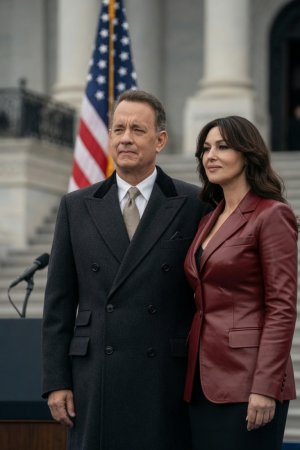
WASHINGTON, D.C. - Vice President Knight today celebrated his inauguration as Vice President of the United States, and that of President Reeves, thanking Associate Justice Clarence Thomas for administering his Oath of Office, and giving special thanks to former Vice President Harris for her cooperation during the transition.

The Vice President said: “the professionalism and support of the whole transitional team has been superlative, and the President and I owe a great deal of gratitude to the outgoing First and Second Families for their forthright support and grace during this period.”

“I am grateful to Associate Justice Thomas for agreeing to administer to me the Oath of Office, which is something that I take incredibly seriously.”

Speaking about his role within the administration, the Vice President said: “my first responsibility is to the people and the constitution, and I have a very clearly defined role as President of the Senate to which I intend to devote significant time.”

“Beyond that, my priority is to get Congress moving and ensure we can pass the legislation that we need to get through to tackle the affordability crisis, illegal immigration, the security issues facing our country and the need for tangible reform in healthcare, education and the way our country works.”

“I will work with the Senate Majority and Minority Leaders to seek to make sure we are getting dockets that can get to the President’s desk.”

The Vice President has appointed Tyler Cowen as his Chief of Staff and fellow Oxford alumnus Kirsten Fedewa as Director of Communications.
 
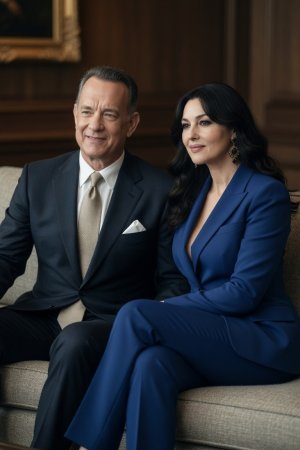
WASHINGTON, D.C. – Second Lady Chloé Knight today announced the launch of her signature policy and outreach initiative, the "Opportunity for All" agenda. The program is dedicated to expanding educational freedom, championing market-driven vocational training, and empowering the next generation of American workers through alternatives to traditional four-year degree tracks.

As part of this initiative, the Second Lady will work to foster public-private partnerships that bridge the gap between classroom instruction and the modern economy. Her efforts will focus on three core pillars: scaling apprenticeship programs in high-demand technical fields, advocating for increased access to public charter schools, and promoting a "skills-first" hiring culture that recognises the value of professional certifications over conventional academic credentials.

"America’s strength has always been the ingenuity and drive of its people, yet for too long, we have funneled our youth toward a one-size-fits-all model that doesn't always meet the demands of the modern workforce," said Second Lady Chloé Knight. "By fostering competition in education and removing the barriers to vocational excellence, we can provide every student with the tools they need to achieve financial independence and professional fulfillment. It is time we recognise that a path built on technical proficiency and real-world experience is a path to the American Dream.”

In the coming months, the Second Lady will lead a nationwide "Path to Productivity" tour, visiting innovative trade schools, private-sector apprenticeship hubs, and charter institutions that are successfully closing the skills gap in their local communities. These engagements will serve to highlight the transformative power of choice and the critical importance of aligning educational outcomes with real-world economic opportunities.

The "Opportunity for All" initiative will coordinate closely with federal and state stakeholders to streamline the path for new apprenticeship models, ensuring that the next generation is equipped with the agility and expertise necessary to compete in a rapidly evolving global economy.

For more information on upcoming engagements and the "Opportunity for All" initiative, please visit the official Office of the Vice President website.
 
IMG_0601.jpeg

WASHINGTON, D.C. — Second Lady Chloé Knight today announced a focused campaign to encourage states that ban or heavily restrict public charter schools to open the door to more high-quality options for families, with particular emphasis on improving outcomes for low-income students.

Mrs. Knight will travel to key states in the coming weeks to meet with parents, educators, and state leaders. She will highlight evidence showing that well-run charter schools often deliver stronger academic results for disadvantaged students than traditional district schools.

“Every child deserves a shot at a great education, regardless of zip code or family income,” said Second Lady Chloé Knight. “In too many places, outdated restrictions are blocking families from accessing schools that are proving they can deliver. When we look at the data, especially for low-income students, the case for expanding high-quality public charter schools is clear. I’m going to make that case directly to state leaders and parents.”

Research from the Center for Research on Education Outcomes (CREDO) at Stanford University and other independent analyses has repeatedly found that charter schools, on average, produce greater academic growth for low-income students, Black students, and Hispanic students compared with traditional public schools in many urban areas. Studies have shown particularly strong results in cities where charter sectors are well-established and held to high standards. These gains matter most for the students who have historically been underserved.

Vice President Austin Knight expressed full support for the Second Lady’s initiative.

“Chloé is exactly right to focus on results for kids who need them most,” said Vice President Knight. “Parents in Nebraska, South Dakota, Vermont, and states with heavy restrictions should not be denied options that are working elsewhere. We respect that education is primarily a state responsibility, but we will not stay silent when evidence shows better pathways exist for low-income students. I stand firmly behind Chloé’s efforts to expand opportunity.”

The campaign will concentrate on the three states that currently have no charter school law - Nebraska, South Dakota, and Vermont - as well as states with significant restrictions, including recent limits such as Rhode Island’s moratorium on new charters. Mrs. Knight will emphasize that lifting bans and caps does not require lowering standards; it requires giving families more high-quality public options and holding every school accountable for results.

Further details on the Second Lady’s travel schedule and events will be released in the coming days.
 
IMG_0784.jpeg

**22nd Batsman’s Cup to be played in Portland and London**

The 22nd Annual Batsman’s Cup - a tournament organised since 2005 by Vice President Austin Knight - will be played this year between Portland, Maine and Lord’s Cricket Ground in London.

The “largest ever” iteration of the Cup will pit minor league baseball teams from across the state of Maine against lineups from the English Marylebone Cricket Club, with baseball and cricket both being played by American and British teams having a try at each other’s sport.

The Vice President has sponsored the Cup for over two decades as an attempt to expand the appeal of cricket in the United States and baseball in Britain and Europe, and the event now also works in partnership with numerous US and UK schools and universities to promote academic scholarship and sporting opportunities on both sides of the Atlantic.

The first game will be played in London and see the Portland Sea Dogs take on the MCC in Test Cricket at Lord’s; the two teams will then play baseball in Maine. A total of six “sets” of baseball and cricket will be played across twelve individual cricketing and baseball team lineups, and an additional children’s cup will see Maine schoolchildren participate in an exchange programme with students from Mossbourne Community Academy in Hackney.

Vice President Knight said that the “biggest and best yet” iteration of the cup would “hopefully spur renewed interest in the shared sporting heritage of America and Europe, and increase opportunities for baseball teams and coverage in the UK and the small number of cricketing communities in the United States.”

“I want to get India in on this next time - I recently watched Million Dollar Arm which is a great true story about Indian cricketers being brought into the MLB.”

The Vice President has extended an invitation to all members of Congress to attend the games.
 
IMG_0722.jpeg

Joint Communiqué
Democratic Prosperity Partnership
New Delhi


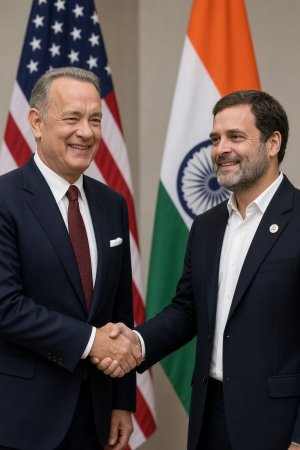
Vice President Austin Knight of the United States of America and Prime Minister Rahul Gandhi of the Republic of India held substantive private discussions on the future of the bilateral relationship. Both leaders welcomed the opportunity presented by new administrations in each country and affirmed their shared interest in a durable, mutually beneficial partnership grounded in democratic institutions, commercial logic, and strategic autonomy.

The two sides agreed that the relationship should prioritise voluntary exchange, the removal of barriers to trade and investment, secure property rights, and the free movement of private capital. Government’s proper role is to lower transaction costs, protect contracts and intellectual property, and expand reciprocal market access - not to pick winners, underwrite losses, impose mandates, or manage supply chains. India’s democratic institutions, English-language skilled workforce, rule of law, and geographic position already confer advantages. The objective is to make India the higher-return, lower-risk jurisdiction relative to alternatives so that capital, production, and talent migrate on commercial terms.

India retains complete freedom in determining its energy suppliers, defence relationships, and economic policy. Greater competition and openness are recognised as creating opportunities for both countries without any requirement that India alter existing relationships or forgo strategic autonomy.

Shared Principles
  • Free trade and capital mobility first. Tariffs, local-content requirements, forced technology transfer, and data-localisation mandates are barriers to be reduced on a reciprocal basis.

  • Private actors decide location, scale, and technology. Public policy creates the conditions; it does not dictate outcomes.

  • Energy and critical-minerals arrangements must be commercially viable, multi-year contracts, not political favours.

  • Security cooperation remains defensive, modular, and fully respectful of India’s strategic autonomy.

  • Talent should circulate on the basis of genuine choice. The objective is not simply to encourage Indians to return, but to create such strong opportunities in India that the brightest young people have a real choice about where they build their futures.
Agreed Direction of Travel

The leaders endorsed three parallel tracks that provide a practical foundation for progress. These tracks will be advanced immediately and announced at a bilateral summit in New Delhi in the coming days under the banner of the Democratic Prosperity Partnership. Parallel Track 1.5 dialogues with CII, FICCI, and U.S. chambers will ensure private-sector priorities drive the agenda. Both sides stressed the importance of demonstrating tangible results rather than merely announcing another diplomatic framework.

1. High-standard Free Trade Agreement
Negotiations will begin toward a comprehensive, WTO-plus Free Trade Agreement covering digital trade, services, investment protection, and intellectual property. The aim is reciprocal market access that lowers barriers. On the U.S. side this includes accelerated access for Indian IT services, pharmaceuticals, and skilled professionals, together with mutual recognition of standards. On India’s side it includes phased reduction of the highest tariffs on electronics, medical devices, and other competitive sectors, clearer rules on data and localisation, stronger IP enforcement, and investor-state dispute settlement limited to expropriation and contract breach. The agreement will be framed domestically in both countries as job-creating specialisation, not managed trade. When total landed cost (labour, logistics, policy risk, and IP protection) favours India, production will follow commercial logic.

2. Investment facilitation and risk mitigation
The United States will expand political-risk insurance and local-currency financing through its development finance institutions so that private American capital can underwrite greenfield manufacturing, research centres, and supply-chain projects in India on commercial terms. Fast-track support will be available for bankable projects in electronics, pharmaceuticals, critical minerals processing, and advanced manufacturing—the sectors that generate high-quality domestic employment. Work will proceed on practical enablers (land, power reliability, logistics corridors), preferably through private concessions and state-level competition inside India. Public messaging will emphasise India’s existing demographic and institutional edges rather than claims of matching any other country’s scale overnight.

3. Critical minerals, energy reliability, and nuclear cooperation
A bilateral Critical Minerals understanding will grant reciprocal exploration and offtake rights, paired with long-term, commercially priced LNG supply from U.S. producers and expanded civil nuclear cooperation under the existing 123 Agreement, including small modular reactors. These are multi-year commercial contracts designed to improve energy reliability and give Indian industry a competitive edge; volume and technology choices remain with private refiners, exporters, and vendors. Technical cooperation on refining flexibility will help Indian plants process a wider slate of crudes. India’s decisions on energy suppliers remain entirely its own; greater competition and choice are recognised as beneficial to both sides.

Additional understandings

On high-skill mobility, both sides acknowledged that Indians form the largest share of H-1B recipients and that recent policy adjustments have had a disproportionate impact. The United States confirmed that the current pause is temporary and aimed at programme integrity, wage levels, and enforcement against abuse - not at any single community. Legitimate Indian professionals already in the United States under valid status remain valued members of American communities. The review will be conducted with the principle that genuine talent should be welcomed. Both countries will work to convert one-way migration into two-way circulation by creating the conditions in India - through joint research centres, technology co-development, student exchanges, and investment frameworks - that give young Indians a genuine choice about where they build their futures, rather than treating return as an end in itself.

Defence industrial cooperation will continue under existing frameworks, with private U.S. firms competing for Indian contracts on commercial terms and technology release negotiated case-by-case. Intelligence sharing and maritime domain awareness focused on the Indian Ocean and South China Sea will remain strictly defensive and voluntary. The Quad will continue as a flexible consultative mechanism, not a military alliance.

Sequencing
  • Year 1: Bilateral summit announcement of the Democratic Prosperity Partnership; framework agreement launching FTA negotiations; first tranche of LNG contracts; Critical Minerals MOU.

  • Years 2–3: Completion and ratification of the FTA text; measurable increase in private U.S. FDI announcements; commercial adjustment in energy sourcing where it makes sense for Indian industry.

  • Ongoing: Quad working groups and state-level competition for investment inside India.
Neither side requires the other to abandon strategic autonomy or existing relationships. Production and investment will follow commercial logic once barriers are lowered and rules are clear. Both leaders expressed confidence that a partnership built on mutual respect, reciprocal opportunity, and private enterprise will strengthen both democracies and contribute to a more resilient, rules-based Indo-Pacific.

The two leaders look forward to the early summit in New Delhi and to concrete progress that their peoples can measure in jobs, investment, and shared prosperity.
 
IMG_1017.jpeg

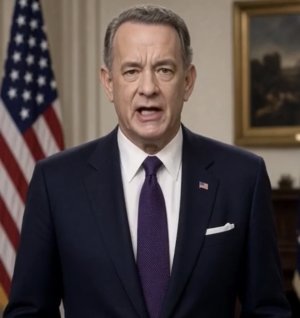
Vice President issues impassioned plea for Ukraine aid during prime-time address

Transcript

Good evening.

As Vice President of the United States I am also President of the Senate. And I feel it both my right and responsibility to speak plainly to the esteemed members of the Senate when matters under their consideration have significance not only for this administration, not only for America, but for humanity and the free world as a whole.

I stand before you today with a clear and urgent request: the Senate must suspend the rules and pass the Patriot Co-Production and Ukrainian Air Defense Industrial Partnership Act of 2026. Do it now. Do it without further delay. This is a test of whether our nation, the birthplace of liberty, the foundry of the flames of freedom, still believes its own founding creed: that governments derive their just powers from the consent of the governed, and that no dictator has the right to erase a free nation by force.

Russia’s war against Ukraine did not begin on February 24, 2022. It began in 2014 with the theft of Crimea, the arming and directing of proxies in the Donbas, and years of hybrid warfare: propaganda, cyber attacks, agent networks, and the careful engineering of artificial “separatism.” Leaked communications from senior Kremlin figures, including those tied to Vladislav Surkov, show Moscow managing and financing the conflict while pretending it was internal. Russia recognized Ukraine’s 1991 borders repeatedly, in the Budapest Memorandum, the 1997 Friendship Treaty, and the 2003 border treaty. Then it violated every one of them.

The historical claims offered as justification, such as shared Kyivan Rus’ heritage, or the assertion that modern Ukraine is a Bolshevik fabrication, are imperial nostalgia, not law or fact. Historians have dismantled them. International law is unambiguous: the UN Charter forbids the threat or use of force against territorial integrity. Acquisition of territory by aggression is illegal. Occupied referendums have no legal force.

What followed the invasion has been systematic brutality. In Bucha and surrounding towns, civilians were executed with hands bound. In Mariupol, residential districts, a maternity hospital, and a theatre clearly marked “CHILDREN” were struck. Russian authorities have deported or forcibly transferred Ukrainian children on a scale the UN Independent International Commission of Inquiry has verified as both war crimes and crimes against humanity. The International Criminal Court has issued arrest warrants for Vladimir Putin and Maria Lvova-Belova for these acts. Torture, sexual violence, filtration camps, and the deliberate targeting of energy infrastructure to freeze and darken civilian life have been extensively documented.

The human cost is staggering. The United Nations has verified nearly 17,000 Ukrainian civilians killed and more than 50,000 injured since the full-scale invasion - numbers that continue to climb. Ukrainian soldiers have paid an even heavier price in lives and limbs to hold the line.

Some still repeat the propaganda that Ukraine is irredeemably corrupt or controlled by fascists. The record shows otherwise. Ukraine has built anti-corruption institutions that investigate the powerful. Its president is Jewish. Extremist parties have negligible electoral support. Units with complicated origins have been subordinated to the state and professionalised. These claims are pretexts.

And this aggression is not limited to Ukraine. Russian strategic writings - from Dugin’s geopolitics to official near-abroad doctrine - treat independent, Western-oriented states on Russia’s borders as temporary inconveniences. The Baltics, Moldova, and the broader Eastern European security architecture remain in the crosshairs of a worldview that demands buffers and spheres of influence enforced by force.

That is why America cannot sit this out. In 1939 the world watched a European dictator dismantle the independence of smaller nations while many hoped distance or accommodation would keep them safe. The result was catastrophe. The lesson was paid for in blood: aggression left unanswered metastasizes.

We in this nation helped defeat fascism. We contained Soviet expansion. We underwrote the order that has prevented great-power war from consuming the planet for generations. The Budapest Memorandum carried our signature, for heaven’s sake. When those assurances are shredded, every American security commitment is tested.

The bill before the Senate answers that test with concrete strength. It authorises licensed production in Ukraine under strict United States oversight, security standards, cybersecurity requirements, personnel vetting, and end-use monitoring of Patriot launchers, interceptors, radars, and related systems. It funds the industrial partnerships, training, and facilities needed to expand capacity. It keeps every technology transfer under American control and every produced system subject to our export laws.

This is is deterrence through capability. It shortens delivery times. It multiplies the number of missiles that can intercept the ballistic and cruise threats raining down on Ukrainian cities. It strengthens the collective defense industrial base. It raises the cost of further Russian expansion.

I urge the Senate leadership and every member: suspend the rules. Bring this bill to the floor. Pass it. History will record whether we met this moment with clarity or with hesitation.

The flame of liberty does not tend itself.

If you do not act today, the unredeemed phantom of Soviet expansionist ambition will rise up and threaten the whole world in its sleep. Where America leads, America wins: where America absolves herself of her duty, the whole world will lose out.

Thank you. I have time for one or two questions only.
 
Vice President Austin Knight: Charter School Defeats in Nebraska, South Dakota, and Vermont Will Not End the Fight for Educational Freedom

Today, Vice President Austin Knight issued the following statement in response to the failure of charter school authorisation bills in Nebraska, South Dakota, and Vermont - the only three states still without a public charter school law:

“These legislative setbacks in Nebraska, South Dakota, and Vermont are disappointing, but they are not the final word. Parents in every corner of this country - urban, suburban, and rural - deserve the freedom to choose the best education for their children. The evidence is clear: public charter schools deliver stronger academic results for students, particularly those who need it most. We will not stop working until every family has access to that opportunity.

The latest national research from Stanford University’s Centre for Research on Education Outcomes (CREDO) shows that charter school students gain the equivalent of 16 additional days of learning in reading and 6 additional days in math compared to carefully matched peers in traditional public schools. These gains have grown substantially over the past decade and a half. Black and Hispanic students, as well as students from low-income families, see even larger benefits - often measured in weeks of extra learning each year. Charter schools achieve these results while frequently serving higher shares of students of colour and students in poverty than nearby traditional public schools.

This is not abstract theory. It is measured student growth on state assessments across dozens of states and millions of students. Charter schools have improved over time because they operate with greater autonomy in exchange for accountability for results. When schools succeed, they expand; when they fail, they close. That simple discipline produces better outcomes for kids.

I understand the concerns raised by rural lawmakers about the impact on small public school districts. Those concerns deserve respect and careful policy design. But protecting institutional budgets cannot come at the expense of children’s futures. Funding should follow the student. Families in small towns and farming communities deserve the same right to seek better options that families in larger cities already enjoy in 47 other states. Educational freedom is not a threat to public education - it is a proven way to strengthen it through innovation, competition, and parental empowerment.

The defeats this session in Nebraska’s unicameral legislature, the South Dakota House, and the Vermont House mark the opening chapter of a sustained national effort, not the closing one. Allies in those states will return next session with refined legislation that addresses legitimate rural concerns while expanding opportunity. We will continue supporting high-quality charter authorising laws, equitable funding, and policies that put students first.

Every child in America deserves a chance at an education that prepares them for success. The data show that public charter schools help deliver that chance. We will keep pushing until Nebraska, South Dakota, and Vermont join the rest of the nation in offering educational freedom to their families.”
 
Interview on WVOM

HALE: You’re listening to WVOM The Voice of Maine this morning with me, George Hale. And with me today a very special guest; former Governor of Maine, former Senator from Maine; organiser of a major ball-sport tournament happening in Maine and now the Vice President of the United States. I’m joined by Austin Knight.


KNIGHT: Good morning.


HALE: Thank you for being on the show. Mr Vice President, being a northeastern Republican from the state of Maine is very different to being someone like Tiffany Douglas or Catalina Vega from those deep red states like Alaska and Florida, isn’t it?


KNIGHT: Well not fundamentally, actually, because you believe in the same things, you pursue the same objectives, and you fight the same fights. The difference is probably one of emphasis and maybe one of style, but I’ve rarely actually seen the GOP more united than it is today. That’s a credit to the President but it’s also a credit to our Senate leadership and to the Republican movement up and down the country.


HALE: I didn’t want the party line, sir, I just wanted to know if you thought folks in Maine had a different political outlook to people elsewhere.


KNIGHT: Well, I get twenty bucks every time I talk about party unity.


HALE: From the President?


KNIGHT: No, from Tabitha Kinsey. But look, the serious answer to that question is that again, it’s an issue of emphasis. Folks in Maine have the same ambitions, aspirations and fears as anyone anywhere in the country. We all want to do work and do well, we all want to have a nice home, we all want to raise a family, we all want to earn more money and keep more of it, we all want to see America strong. Well, we don’t all want that, but the vast majority of us do. In Maine the key issue might be more about housing, in Alaska it might be energy and drilling, in New York it might be crime and the cost of living. But we’re all pretty much on the same hymn sheet as far as the American Dream goes.


HALE: You spent years as the Governor of this state and years as its Senator, and now you’ve kind of had to leave Maine behind you to be the Vice President. What have you taken with you and what have you left behind?


KNIGHT: I don’t think I’ve left anything behind. I mean, I’ve had a house near Portland for 46 years. I grew up in my old folks’ place here too. I built a business here, I built a charity here, I built schools here, and I know the values that keep our families in this neck of the wood strong. What I challenge is the notion that… you know, even in an era where we seem more polarised, I think most decent people wherever they’re from have the same basic priorities.


HALE: And those priorities, would you say the administration is delivering on them?


KNIGHT: You’ve got the Reeves Tax Cuts, the Family Plan, the minimum wage going to $15, you’ve got major commitments to dealing with crime and illegal immigration, you’ve got huge investment into the economy, you’ve got an America that is standing tall in the world with thanks to Secretary Redgrave and his team, and you’ve got the kind of - I actually want to emphasise this. So on the minimum wage score. We’re getting it up to $15, and there’s gonna be no income tax on social security or tips. And uh, the Democrats have had trifectas before and they’ve not done that. President Reeves has a divided Congress and he’s just delivered that. And we’re creating so many jobs and so much wealth that is being distributed, you know - these bipartisan movements, there’s a real shift in the sand and actually when I was negotiating things like the PROSPER Act we found that there was a lot of will to just get things done. This administration is sure as hell getting things done.


HALE: But you yourself have criticised Congress, you’ve said you don’t like the holds and the filibusters, there are a lot of bills sitting in legislative inboxes because the two chambers can’t agree on what to pass, and you’ve had to really put your credibility on the line to push through stuff like aid for Ukraine. Is the President being held back by Congress?


KNIGHT: Well we can only move as fast as Congress will let us. And of course it frustrates me when bills can’t even be debated because one Senator out of 100 doesn’t want to have the conversation. But Senator Vega has been very effective in getting legislation too, I think she’s probably a future Commander in Chief, and the serious work is still happening. We’re getting the most significant package on wages and taxes through that there’s been in living memory.


HALE: Now, I want to talk to you about one of the President’s policies in particular. Secretary Titus pretty much gridlocked New York City earlier in the year to deploy ICE en masse and round up illegal aliens. Is that the kind of display you’re comfortable with?


KNIGHT: I always said that people who had broken our laws to enter and stay in the US illegally would need to be dealt with, and I set out a clear explanation of how you’d prioritise that. You can’t deport illegal immigrants if you won’t go and find them.


HALE: Right, but police checkpoints on the streets of our biggest city? Officers checking papers on the street? That’s like something out of the Soviet Union, surely.


KNIGHT: And the point I made when I spoke about this was that if people expected 11 million deportations in four years, they were going to have to sign on for a police state and massive surveillance and something like twenty four times the funding for enforcement. Now I think what the DHS did in New York was really about optics and messaging. If you’re here illegally, we can and will come for you.


HALE: Right but I… I’m not really getting an answer to the question here, which is whether you’re comfortable with that kind of display.


KNIGHT: I’m comfortable with the enforcement of the law.


HALE: But you’re also on the record as backing a pathway to citizenship.


KNIGHT: Right, but I think I mean something quite different by that to what it means when the Democrats say it. It’s not an automatic endpoint for anyone who’s staying here illegally; it’s a process which is open to people who have been here a long time, served their communities and proven their value as Americans in all but name. And it’s a process that the United States owns, designs and officiates. Noone bar the natural-born has a right to be an American: but the best people who’ve made their lives here should have some kind of incentive to come forward and cooperate with the authorities to get certainty about their status.


HALE: And you don’t it’s at all inconsistent to round up illegals on the streets of Manhattan and then say some people can get the right to stay however they got in?


KNIGHT: It’s not inconsistent to say that deporting criminals, offenders by default is different to a family man who’s been here forty years and employed a bunch of people maybe should have the opportunity to explain his circumstances, cooperate with investigations and maybe at the end of that get his papers.


HALE: Okay, but ICE officers on New York street en masse… that’s not a targeted act against criminals. That’s not a scalpel, it’s a sledgehammer. You don’t know how many of your family men were caught up in that.


KNIGHT: I do know that removals are at the highest they’ve ever been, and that’s what the President promised and what he delivered. What I would like is for Congress to get to setting a framework whereby if people come forward voluntarily and cooperate they can have a little more leeway.


HALE: Okay. So it’s carrot and stick.


KNIGHT: Carrot and stick is generally how I work. My position on a lot of issues is that you need to triangulate the conservative position with the concerns of people who aren’t die-hard Republicans. So you can be pro-life and against abortions except in the most extreme circumstances, but you also have to say what you’re going to do to support mothers, children and families, and how you’re going to convince people who aren’t on your side that they’re not being maligned by the big bad Republican Party.


HALE: Was carrot and stick your approach to the talks you had in India with Rahul Gandhi?


KNIGHT: No, that was mostly carrot. Because fundamentally if you have influential nations which trade more freely, cooperate more fully and embrace the opportunity to ensure that democracies continue to lead in the world, there isn’t really anyone who loses out.


HALE: Well, American workers will lose out if jobs go over to India because it’s cheaper and easier to do it there now.


KNIGHT: They won’t, because in the first instance most of the manufacturing movement you’ll see is from China - a communist police state - to India, an ally and a democracy; and because America is strong enough to innovate, invest and create new jobs in every decade. IPhones have never been made in America and they probably never will be. But if we make them in India we cut off the head of the Chinese viper and the American company that designs them creates more jobs and more wealth. Look at my shoes, right? Look at my shoes. I don’t know where the leather comes from, or the rubber, or the cotton for the laces, but I bet they all come from different people in different places. There’s no one man or one company or even one country, I’ll bet, who supplies everything that went into these shoes. The benefit of trade is that you do what you’re good at, sell that stuff to get wealthy and then use your wealth to buy the stuff that other people are best it. That’s all the free market economy is, and it works a hell of a lot better than the alternative. Autarky is inherently socialistic and socialism is inherently autarkic, and they both, inherently, make you both poor and unfree.


HALE: You’re a pretty virulent free trader in a Republican Party that today is more and more talking about America first and America always.


KNIGHT: America first isn’t the same thing as America alone and it certainly doesn’t mean you have a command economy. I’ve railed against tariffs for decades now because all they are is a tax on people who buy things.


HALE: You’re the guy who wanted a federal sales tax, right?


KNIGHT: Sure, but only as an alternative to the income tax, which fundamentally is a tax on going to workZ


HALE: And a sales tax is a tax on buying things.


KNIGHT: The point is that the basis of the tax system should be to maximise the money people and businesses have in their pockets with which to make decisions about spending, investment and saving. Tariffs aren’t bad because they tax purchases; they’re bad because they distort the market, and fundamentally a lot of American factories rely on raw materials that are imported. So this idea, by the way, that free trade stands at odds with supporting American factory workers is a bit of a myth. If we had no tariffs on cars from Germany, and they had no tariffs on cars from the US, we’d sell them more Cadillacs and we’d be more able to buy BMWs if we wanted to. I don’t see how that’s not a win for everyone.


HALE: Well, the argument that’s made is that they’d flood us with BMWs and Cadillac would have trouble in the US market.


KNIGHT: Any business that builds a superior product will succeed. You don’t believe the American auto industry builds superior products?


HALE: Maybe they do, but the costs might be higher and such and your agenda, with the minimum wage increase, has directly contributed to that.


KNIGHT: There are some fundamental rules I’d apply to business. One, you’ve got to sell a good product. Two, you’ve got to pay your workers enough to live on. If you can’t do those things, you won’t be successful.


HALE: And if Cadillac can’t afford a $15 minimum wage, you’re okay with them not being successful?


KNIGHT: Cadillac can afford a $15 minimum wage. The biggest thing we can do to help them is make sure they can get the parts in cheaper with free trade, making sure they’re not strangled by overregulation in a free market, and reduce their tax liabilities and raise their profits in a free country.


HALE: Does the President agree with you on tariffs?


KNIGHT: He wanted me to go to India and get a deal on trade, minerals, investment… I did that. I’d say he’s onboard.


HALE: Does Tiffany Douglas agree with you on tariffs?


KNIGHT: She wants to sell Alaskan oil to the whole wide world. I’m going to help her to make sure that happens. And we’ll do that with global partnerships which reduce the costs and the red tape for everyone. There’s a great bill going through Congress on LNG. If we can get LNG going to Europe and India in huge quantities we can cut off the dependence on Russian gas. We want these people to buy from us, and we want them to sell to us too. I was a businessman. This is how business works.


HALE: Who’s your favourite Republican President?


KNIGHT: Abraham Lincoln.


HALE: Second favourite?


KNIGHT: You’re trying to create the image of a divide between myself and the President. There isn’t one.


HALE: It’s a simple question.


KNIGHT: The President is barely a year in and he’s already achieved things the Democrats couldn’t do in four years under Biden and eight under Obama. He’s going to go down in history as a great American President. But look, the guy who inspired me forty years ago was Ronald Reagan.


HALE: Where does Donald Trump rank on your list?


KNIGHT: Hah, well, he called me a nasty man, so.


HALE: And you voted to impeach him.


KNIGHT: Yeah, because Presidents aren’t above the law. It wasn’t a political judgement, it was a constitutional one.


HALE: And that surely doesn’t enamour you to the base of the Freedom Caucus or the MAGA crowd.


KNIGHT: I’m sure it probably doesn’t, but the point I’ve made is that Donald Trump stopped being President five years ago, and we need to focus on the future. Republicans will not lead for long if we continue to litigate the debates of the past. We need to be defining what tomorrow looks like.


HALE: Mr Vice President, your wife put out a tweet asking about androgen insensitivity syndrome. It seemed a lot like a thinly-veiled criticism of the President’s Executive Order on trans athletes. Do you have any comment on that?


KNIGHT: I think Chloe was pointing out that the chromosomal basis is not totally reliable in terms of determining whether someone is a man or a woman. But fundamentally, I totally agree with the position that biological men should not be competing in women’s sports. Women face enough challenges. And one of them, by the way, is the presumption that my wife is my chattel and that her tweets reflect my views.


HALE: If the Second Lady of the United States is making a political point, it seems fair to ask the Vice President about it.


KNIGHT: Sure, but she could tweet tomorrow that she hates the President’s cologne and that wouldn’t be something she needed to discuss with me.


HALE: What cologne does the President wear?


KNIGHT: I have absolutely no idea. I wear Molton Brown.


HALE: Expensive?


KNIGHT: I don’t know.


HALE: A final question for you, Mr Vice President: had the Republican primaries gone differently, yourself and Liam Reeves might have swapped positions. Do you see yourself running for President again once your time as number-two is up?


KNIGHT: I think I’ll be too old by the end of the President’s second term. I like the Senate Majority Leader for 2032.


HALE: Mr Vice President, thank you.


KNIGHT: Thank you.
 
Back
Top