Currently: Q1, 2017 (Ends Sunday, November 21st at 11:59 PM EST (7 days)
Join our Discord server! See Discord icon under this banner!

Press Office of United States Senator from Iowa Sarah Johansen

Alaskancrabpuffs

Member
Republican


Youve_Got_Mail_331.jpg

Welcome to the Official Press Office of Senator Sarah Johansen
==== TBD ====​
 
FOR IMMEDIATE RELEASE


Johansen Introduces Targeting Child Predators Act to Strengthen Tools Against Child Exploitation​


Bipartisan-style reform provides clear certification process and judicial review for nondisclosure requirements on administrative subpoenas used in child predator investigations


WASHINGTON, D.C. –
Today, U.S. Senator Sarah Johansen (R-IA) introduced the Targeting Child Predators Act of 2015, legislation to update federal law governing administrative subpoenas in investigations of child sexual exploitation and abuse. The bill establishes a clear certification process for nondisclosure requirements accompanying these subpoenas and creates a structured path for judicial review, ensuring law enforcement can protect children while preserving appropriate oversight.

“Child predators thrive in secrecy and move quickly to destroy evidence or intimidate victims and witnesses,” said Senator Johansen. “This bill gives investigators the tools they need to act decisively while building in strong judicial safeguards. Iowans expect us to put the safety of children first, and that means modernizing the law so we can stay ahead of those who prey on the most vulnerable.”

The Targeting Child Predators Act of 2015 amends Section 3486 of title 18, United States Code. Key provisions include:

  • Replacing outdated references to the Secretary of the Treasury with the Secretary of Homeland Security to reflect current investigative responsibilities.
  • Establishing that a nondisclosure requirement may accompany an administrative subpoena when a federal official certifies that disclosure could endanger life or physical safety, facilitate flight from prosecution, result in destruction or tampering of evidence, intimidate potential witnesses, or otherwise seriously jeopardize an investigation or delay a trial.
  • Limiting the initial nondisclosure period to 180 days, with clear procedures for extensions.
  • Allowing limited disclosures necessary for compliance, legal advice, or as otherwise permitted by the issuing official, while ensuring those recipients remain bound by the same nondisclosure rules.
  • Creating a new Section 3486A that provides for prompt judicial review of nondisclosure requirements in federal district court, with closed hearings and sealed records as needed to protect the integrity of ongoing investigations.
  • Requiring that subpoenas carrying nondisclosure requirements include notice of the right to judicial review.

Senator Johansen expressed special thanks to Florida Governor Ron DeSantis for his early engagement and input on the importance of equipping investigators with practical, constitutionally sound tools.


“Protecting children from predators is not a partisan issue it is a moral imperative,” Johansen said. “This legislation strikes the right balance: it empowers law enforcement to move quickly against those who exploit children online and offline, while ensuring meaningful judicial oversight so that these powers are used responsibly. I look forward to working with colleagues on both sides of the aisle to advance this bill.”

The Targeting Child Predators Act of 2015 continues Iowa’s longstanding tradition of supporting strong, practical measures to combat child exploitation. Senator Johansen has consistently prioritized legislation that strengthens law enforcement’s ability to protect families while upholding due process and the rule of law.
 

Johansen & Titus Introduce Sarah’s Law to Mandate Detention of Certain Aliens Charged with Crimes Causing Death or Serious Injury​


Legislation strengthens public safety, ensures victim notification, and closes gaps in current immigration enforcement​


WASHINGTON, D.C. – Today, U.S. Senator Sarah Johansen (R-IA), along with Senator Titus introduced Sarah’s Law, bipartisan legislation requiring U.S. Immigration and Customs Enforcement (ICE) to take into custody certain aliens charged with crimes that resulted in the death or serious bodily injury of another person. The bill also establishes clear notification requirements so victims and their families receive timely information about the status of the accused.

Senator Johansen expressed the importance of prioritizing public safety and supporting crime victims.


“When someone who has no legal right to be in our country is charged with a crime that kills or seriously injures an American, the federal government has a basic duty to keep that individual detained pending immigration proceedings,” said Senator Johansen. “Sarah’s Law closes a dangerous gap. It ensures that those who entered illegally, overstayed, or had their visas revoked and are then charged with these serious violent crimes are not released back into our communities. Just as importantly, it gives victims and their families the information and dignity they deserve.”


Sarah’s Law amends Section 236(c) of the Immigration and Nationality Act to require mandatory detention for an alien who:


  • Was not inspected and admitted into the United States;
  • Held a nonimmigrant visa or other admission document that has been revoked; or
  • Is deportable for failing to maintain nonimmigrant status;

and who has been charged by a U.S. prosecuting authority with any crime that resulted in the death or serious bodily injury of another person (as defined under federal law).

The bill further requires ICE, upon encountering or learning of such an alien, to make reasonable efforts to:


  • Identify any victims of the relevant crimes; and
  • Provide the victim or, if the victim is deceased, a parent, guardian, spouse, or closest living relative with timely and ongoing information, including the alien’s full name and aliases, date of birth, country of nationality, immigration status, criminal history, custody status and any changes to it, and a description of any government efforts to remove the alien from the United States.

A savings provision makes clear that nothing in the Act limits the rights of crime victims under existing law, including the Crime Victims’ Rights Act.

“This is not about punishing legal immigration or targeting entire communities,” Johansen said. “It is about enforcing the law against individuals who have already been charged with causing irreversible harm. Families who have lost a loved one or are dealing with the aftermath of serious injury should not have to wonder whether the person responsible is free in their community. Sarah’s Law puts victims first and strengthens the integrity of our immigration system.”

Johansen and Titus emphasized that the legislation is carefully tailored: it applies only to aliens in specific unlawful status categories who face charges for crimes resulting in death or serious bodily injury. It does not expand detention for lesser offenses or alter other aspects of immigration enforcement.

“Iowans and Americans across the country expect their government to protect public safety and respect the rights of crime victims,” Johansen concluded. “Sarah’s Law is a focused, common-sense step toward meeting that expectation. I look forward to working with colleagues on both sides of the aisle to move this bill through the Judiciary Committee and into law.”
 
Statement from Sen. Sarah Johansen (R-IA):


“The Supreme Court’s decision in Obergefell was a profound overreach that redefined marriage by judicial fiat and left many Americans of faith in an impossible position.

Kim Davis is not a private citizen who can simply step aside. She is an elected official being ordered to put her name and authority on something that violates her deeply held Christian beliefs about the nature of marriage. Forcing public servants to choose between their conscience and their job is not tolerance it is coercion.

We can and should protect the constitutional right of same-sex couples to obtain marriage licenses while also protecting the religious liberty of the officials asked to issue them. Reasonable accommodations such as allowing deputies to handle licenses or creating a process that does not require the clerk’s personal endorsement are both possible and necessary.

Religious liberty is not a second-class right. Congress and the states have a responsibility to ensure that people of faith are not driven from public service simply because they hold traditional views on marriage. I will continue working to strengthen those protections.”
 
FOR IMMEDIATE RELEASE


Johansen Commends Bailey’s American Energy Development and Export Infrastructure Act, Pledges Strong Support​


Senator praises legislation to modernize export ports, streamline permitting, end coal leasing delays, and protect workers from automation impacts


WASHINGTON, D.C. –
U.S. Senator Sarah Johansen (R-IA) today voiced strong support for the American Energy Development and Export Infrastructure Act, introduced by Senator Bailey, and thanked him for his leadership on strengthening American energy production and exports.

“I want to thank Senator Bailey for putting forward this serious, practical bill,” said Senator Johansen. “He has identified a clear national need: our ports and terminals that move American coal and natural gas to the world are aging and constrained, while needless delays in permitting and leasing keep reliable energy and good-paying jobs locked up. This legislation addresses both the infrastructure and the regulatory bottlenecks in a responsible way. I am glad to support it and look forward to working with him to advance it.”

The American Energy Development and Export Infrastructure Act authorizes $25 billion over fiscal years 2017–2020 for grants to modernize and expand shipping, handling, storage, and processing capacity for U.S.-produced coal and natural gas at key designated ports and terminals, including facilities in Virginia, Maryland, Alabama, Louisiana, Michigan, Ohio, and West Virginia. The bill prioritizes projects that increase export capacity, efficiency, safety, and reliability while requiring compliance with environmental laws, Davis-Bacon wage standards, and Buy America provisions.

In addition to the infrastructure grants, the legislation includes targeted reforms to:


  • Establish enforceable, accelerated deadlines for National Environmental Policy Act reviews of covered coal and natural gas projects, with concurrent interagency review and limits on the scope of analysis to direct, reasonably foreseeable effects.
  • Terminate existing federal coal leasing moratoria and require regular competitive lease sales in major coal production regions.
  • Reform judicial review by favoring remand without vacatur in most cases, shortening the statute of limitations, limiting venue, and requiring bonds for preliminary injunctions.
Senator Bailey also added an important amendment creating Port Worker Retraining Funds. When grant funds are used for automation-capable equipment, 8 percent of the equipment cost must be set aside for job training, retraining, and placement assistance for workers displaced by that automation. The amendment further requires a five-year first-look hiring preference for displaced workers at the affected ports and terminals.


“American energy is an engine of jobs, economic growth, and energy security for our allies,” Johansen said. “Investing in the ports that move our coal and natural gas to market, while cutting through permitting delays and protecting workers who may be affected by new technology, is exactly the kind of balanced, pro-growth approach we need. Senator Bailey has put forward a strong bill, and I am pleased to stand with him in supporting it.”

Johansen noted that reliable domestic energy production and export capacity strengthen the U.S. balance of trade, support manufacturing and transportation jobs across the Midwest including in Iowa and reduce the leverage of adversarial energy suppliers abroad.
 

Johansen Blasts Obama Administration Veto Threat Against American Energy Export Bill​


Senator calls Statement of Administration Policy a rejection of jobs, energy security, and common-sense permitting reform​


WASHINGTON, D.C. – U.S. Senator Sarah Johansen (R-IA) today strongly condemned the Obama Administration’s Statement of Administration Policy threatening to veto the American Energy Development and Export Infrastructure Act if its permitting, coal leasing, and judicial review reforms remain intact.

“This veto threat is a clear message from the White House: they would rather preserve endless bureaucratic delay than support American energy workers, modern infrastructure, and reliable exports to our allies,” said Senator Johansen. “The Administration claims to favor ‘timely and predictable’ permitting, yet it rejects the very tools that would make those timelines real and enforceable. That is not compromise it is obstruction dressed up as principle.”

Johansen noted that the Administration acknowledges Title I’s port and terminal investments as a constructive starting point and even welcomes the worker retraining and hiring-preference provisions added for those displaced by automation. Yet it simultaneously demands the gutting of Titles II through IV—the sections that actually address the multi-year delays, leasing moratoria, and litigation tactics that have kept American coal and natural gas from reaching market efficiently.

“You cannot claim to support energy infrastructure while insisting that agencies be allowed to miss deadlines with no consequence, that federal coal leasing remain subject to indefinite political pauses, and that courts leave unlawful decisions in place only under nearly impossible standards,” Johansen said. “The Administration wants the photo-op of investment without the substance of reform. That approach has already cost American jobs and weakened our energy position abroad.”

Johansen rejected the White House’s characterization of the bill’s reforms as corporate giveaways. She emphasized that the legislation maintains environmental review requirements, requires analysis of direct effects, preserves public participation, and includes strong labor standards and worker protections. What it ends, she said, is open-ended process that benefits neither the environment nor the communities that depend on energy production and transportation.

“Iowans understand the difference between responsible oversight and paralysis by process,” Johansen continued. “Farmers, manufacturers, and energy workers across our state and the Midwest need predictable rules and modern infrastructure not another veto threat that prioritizes ideology over results. This bill invests in American ports, protects displaced workers, and restores accountability to a broken permitting system. The Administration’s refusal to accept those reforms is a rejection of the very goals it claims to share.”

Johansen called on the White House to engage in good-faith negotiations that preserve enforceable deadlines, end political leasing moratoria, and maintain meaningful judicial accountability rather than demanding the bill be stripped of the reforms that make the infrastructure investment effective.

“The American people deserve energy policies that deliver jobs, strengthen our economy, and support our allies not endless process and veto threats,” she concluded. “I will continue working to pass this legislation and will not accept a status quo that has failed American workers for too long.”
 

Johansen: “This Video Made Me Sick” – Calls for End to Planned Parenthood Funding and Full Investigation​


Iowa senator reacts to undercover footage with plainspoken disgust and demand for accountability​


WASHINGTON, D.C. –
U.S. Senator Sarah Johansen (R-IA) today responded to the undercover video released by the Center for Medical Integrity with blunt, personal disgust and a clear call to end taxpayer funding for Planned Parenthood.

“I unfortunately watched that video, and it made me sick. I really wish I hadn't, but it was eye opening, disturbing, and disgusting...” Johansen said. “Sitting there talking over lunch about money for fetal tissue like it’s just another business transaction that’s not healthcare. That’s treating little lives like inventory. I don’t care how you edit it or spin it. Most regular people, including most Iowans, are going to look at that and feel the same way I do: this is wrong.”

Johansen said the footage raises serious questions that deserve real answers, not press-release denials.

“If there’s any truth to the idea that organizations are getting paid for fetal tissue, then we need a full, independent investigation and we need it now,” she said. “And while that happens, we should stop sending taxpayer dollars to Planned Parenthood. Hardworking people in Iowa shouldn’t have to wonder whether their taxes are helping fund something this troubling. That’s not complicated. It’s common sense.”

She added that the issue goes beyond politics.

“This isn’t about scoring political points. It’s about whether we still believe every life has dignity, even the smallest and youngest ones amongst us. I think most folks back home get that. They expect their representatives to stand up when something this disturbing comes to light not look the other way or hide behind carefully worded statements. I’m not looking the other way.”

Johansen said she will support efforts to end federal funding for Planned Parenthood and will push for thorough oversight of the practices shown in the video and any related activities.

“People are tired of excuses,” she said. “Let’s get the facts, hold people accountable, and stop the public money. That’s the least we can do.”
 
Character Name: Sarah Johansen (R-Iowa)
Show Name: KCCI Des Moines
Topic: Undercover Video on Fetal Tissue and Taxpayer Funding

Talking points:


  • I watched that video and it honestly made me sick. Hearing someone talk about money for fetal tissue over lunch, like it’s just another business deal, is something most Iowans would find deeply wrong. This isn’t abstract it’s about how we treat the most vulnerable.

  • Iowans work hard for their paychecks. They deserve to know their tax dollars aren’t going toward anything this troubling. While a full, independent investigation gets to the bottom of what happened, we should stop the federal funding for Planned Parenthood. That’s basic accountability.

  • People back home expect their leaders to face hard things head-on, not hide behind carefully worded statements. I’m calling for a thorough investigation and an end to the public money. Iowans deserve better than excuses.
 
Character Name: Sarah Johansen (R-Iowa)
Show Name: Des Moines Register
Topic: Undercover Video on Fetal Tissue and Taxpayer Funding

Talking points:

  • As a mother, that video hit me hard. Listening to someone discuss money for fetal tissue over lunch felt like a complete rejection of the basic dignity every child deserves. You don’t have to share my politics to feel that something sacred is being cheapened.

  • I think about the young families and moms across Iowa who work hard and try to do right by their kids. They shouldn’t have to wonder whether their tax dollars are supporting practices that treat the remains of unborn children like inventory. That’s not the standard we should accept.

  • We need a full, independent investigation no spin, no excuses. And while that happens, taxpayer funding for Planned Parenthood should stop. Protecting the vulnerable and being responsible with public money are values most Iowa parents understand. I’m standing on those values.
 
=== Start of Q1 2026 ===​

Character Name: Sarah Johansen (R-Iowa)
Show Name: Des Moines Register
Topic: How S.1 Benefits Iowa


Talking points:


  • Iowa runs on affordable energy. Our farmers, truckers, and manufacturers feel every spike in diesel prices. Expanding American energy production and export capacity is one of the most practical ways to put downward pressure on those costs over time and keep more money in the pockets of Iowa families and businesses.

  • When the United States produces and moves more of its own energy, it strengthens our position in the global market and reduces the leverage of foreign suppliers. That stability matters here at home. Lower and more predictable energy costs help with everything from planting and harvest to getting goods to market.

  • This bill is about making sure American energy can actually reach customers efficiently. For Iowa, that means supporting the broader energy economy that our state depends on from the fuel that powers our tractors and semi-trucks to the good-paying jobs tied to production and transportation. I want policies that work for the people who keep this state running.
 
Character Name: Sarah Johansen (R-Iowa)
Show Name: KCCI Des Moines
Topic: How the Energy Bill Helps Iowa


Talking points:


  • Iowa families and businesses feel energy costs every single day. When diesel prices rise, like they have done many times in this failed Obama Administration, it hits farmers during planting and harvest, it hits truckers hauling goods, and it hits manufacturers trying to stay competitive. Expanding American energy production and making it easier to move that energy to market is one practical way to help keep those costs more stable.

  • This bill focuses on modernizing the ports and infrastructure that handle American coal and natural gas exports. A stronger U.S. energy position means less vulnerability to foreign supply swings and more economic activity here at home including jobs and revenue that support states like Iowa.

  • I want policies that actually work for the people who keep this state running. Affordable fuel, reliable energy, and a stronger American energy sector are not abstract Washington issues. They show up in the cost of running a farm, filling a semi, and keeping Iowa businesses moving. That’s why I’m supporting this effort.
 
FOR IMMEDIATE RELEASE
Office of United States Senator Sarah Johansen (R-IA)


Senator Johansen Statement on the Nomination of Judge Sri Srinivasan to the Supreme Court of the United States
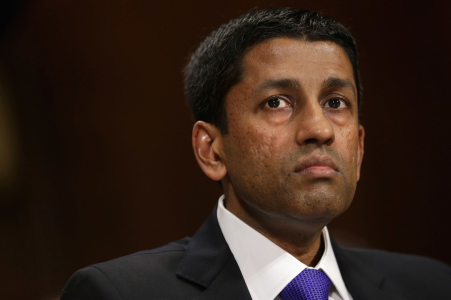
1792282959930.png
​


WASHINGTON, D.C. — United States Senator Sarah Johansen (R-IA) today announced that, after careful review of the nomination hearing and the full record of Judge Sri Srinivasan, she will oppose his confirmation to serve as an Associate Justice of the Supreme Court of the United States.

“The decision to cast a vote on a lifetime appointment to the Supreme Court is among the most solemn responsibilities entrusted to a Member of the Senate,” Senator Johansen said. “It requires more than an assessment of intellect or professional accomplishment. It demands a judgment about whether the nominee’s approach to the law, as demonstrated over a career of advocacy and judging, will strengthen the constitutional order and protect the rights of ordinary citizens. After examining the record in detail, I have concluded that I cannot in good conscience support this nomination.”

Senator Johansen outlined several specific areas of concern that emerged during the hearing and in the nominee’s prior work:


Advocacy on Corporate Liability under the Alien Tort Statute

As counsel for Exxon Mobil in John Doe VIII v. Exxon Mobil Corp., Judge Srinivasan advanced the position that corporations are categorically immune from civil liability under the Alien Tort Statute, even in cases involving allegations of extrajudicial killings, torture, sexual assault, and other serious human rights abuses. He later sought rehearing after the D.C. Circuit rejected that argument. Similar positions were taken on behalf of other corporate clients in related litigation. While every party is entitled to vigorous representation, the consistent advancement of categorical corporate immunity in the face of grave allegations raises legitimate questions about how a Justice Srinivasan would approach questions of accountability when the interests of powerful institutions are at stake. The distinction between advocate and judge is real and important; the record must still be weighed when a nominee seeks a seat on the nation’s highest Court.

The Watters v. Wachovia Brief and Preemption of State Consumer Protections

While serving in the Office of the Solicitor General, Judge Srinivasan participated in the preparation of the United States’ brief in Watters v. Wachovia Bank. That brief urged the Supreme Court to hold that federal law preempted Michigan’s authority to regulate the mortgage-lending activities of a national bank’s operating subsidiary. In doing so, the brief dismissed the state’s consumer-protection concerns as “beside the point” and relied on an Office of the Comptroller of the Currency finding that there was “no reason to believe that [abusive] practices are occurring in the national banking system to any significant degree.”


That assertion was made in November 2006. Within a short time, the housing crisis inflicted severe hardship on families across Michigan and the nation. Judge Srinivasan has acknowledged that the agency’s factual claim proved incorrect. Yet the episode remains troubling. It reflects a willingness to elevate federal preemption and agency assertions over the practical capacity of states to safeguard their residents from predatory lending practices. The brief’s treatment of consumer interests, and the subsequent human cost of the financial crisis, cannot be set aside as mere historical footnote when evaluating fitness for the Supreme Court.


Broader Pattern of Advocacy and the Role of a Justice

The nominee’s career includes representation of Jeffrey Skilling in connection with the Enron scandal and repeated advocacy on behalf of large corporate clients in high-stakes matters. An attorney’s duty to a client is fundamental to our adversarial system, and no one should be denied counsel. At the same time, a Justice of the Supreme Court does not continue the work of the advocate. The Court must decide cases according to the Constitution and the laws enacted by Congress, without regard to the identity or power of the parties. The hearing did not sufficiently allay concerns that the nominee’s long record of advancing the most aggressive available corporate positions may influence the institutional instincts he would bring to the bench.


Senator Johansen emphasized that her opposition is not rooted in personal animus or partisan calculation. “Judge Srinivasan is a highly capable lawyer and jurist with a compelling personal story. He has served under administrations of both parties and has answered questions with care and professionalism. Those facts are not in dispute. What remains in dispute is whether this particular record marked by repeated efforts to limit corporate accountability under the Alien Tort Statute, to preempt state consumer protections in the years preceding the housing crisis, and to advance positions that consistently favored institutional power provides adequate assurance that he will approach the great questions of our time with the necessary independence and regard for the rights of ordinary Americans.”

“The seat to which Judge Srinivasan has been nominated once belonged to Justice Antonin Scalia, a jurist who insisted that the words of the Constitution and of statutes mean what they say and that judges are not free to rewrite them according to preferred policy outcomes. Filling that seat requires a Justice who will exercise similar discipline. After full consideration of the hearing and the underlying record, I am not persuaded that confirming Judge Srinivasan would best serve that standard, the Constitution, or the people of Iowa. I will therefore vote against this nomination.”
 
Back
Top