
Circuit panel says Texas may penalize out-of-state pharmacies for mailing morning-after pills
Judicial | Q2, 2025
FORT WORTH, TEXAS – A three judge panel of the 5th Circuit Court ruled today that a Colorado online pharmacy violated Texas law when it mailed emergency contraception to a woman in Fort Worth, handing Texas its first civil victory under its expanded definition of an “abortion-inducing drug.”
In a 2-1 decision in Renfro v. Alder Health, the court ordered Alder Health to pay Cody Renfro the statutory minimum of $100,000. Renfro was not involved in the purchase but sued under a Texas law allowing private citizens to seek damages from anyone who mails or provides a covered drug within the state.
Judge Caroline Harwood, a Reagan appointee, wrote the majority opinion. She was joined by Judge Edward Marston, a Trump appointee. Both judges are identified as originalists, although the majority’s decision rested primarily on a textual reading of the Texas law.
“The FDA authorized the drug’s distribution; it did not require Alder Health to mail the product into Texas or expressly prohibit Texas from imposing civil liability for doing so,” Harwood wrote.
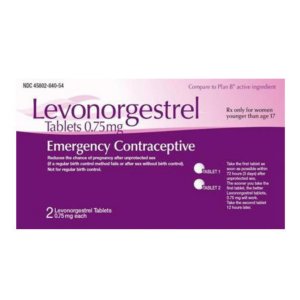
The case arose after an unidentified 26 year old Fort Worth resident ordered levonorgestrel emergency contraception from Alder Health. The company accepted the order and mailed the product from Colorado to an address in Tarrant County.
Texas law defines an abortion-inducing drug to include any product “capable of acting to prevent the implantation of a fertilized ovum.” That definition was added earlier this year to an existing private enforcement law allowing individuals to sue those who mail or provide covered drugs in Texas.
The Food and Drug Administration (FDA) subsequently restored language to the approved labeling for levonorgestrel stating that the drug may prevent implantation of a fertilized ovum. The agency did not restrict the sale of the medication, which remains approved for over-the-counter use.
“My administration believes the American people should receive complete and transparent information about the medicines and drugs they take," "President Liam Reeves (R-South Carolina) said in defense of the FDA at the time. "Drug labels should not change simply because big Pharma requests it or because an administration finds certain language politically inconvenient."
The ruling also rejected Alder Health’s argument that Texas lacked authority over a Colorado company. Harwood emphasized that Alder Health knowingly accepted an order from a Texas resident and deliberately mailed the product to Texas.
“Alder Health, a Colorado company, knowingly accepted an order from a Texas resident and mailed levonorgestrel directly to an address in Tarrant County,” Harwood said. “It therefore purposefully directed the transaction into Texas.”
Alder Health also argued that FDA approval barred Texas from penalizing the drug’s distribution.
The majority disagreed, holding that federal approval did not require Texas to permit shipments into the state.
The ruling exposes out of state pharmacies to $100,000 lawsuits and could further restrict access to emergency contraception in Texas.
Judge Benjamin Talbot, an Obama appointee, dissented from today’s ruling.
“Texas may not use an uncertain and scientifically contested theory to impose extraordinary liability on an out-of-state pharmacy engaged in federally lawful commerce,” Talbot wrote.
Talbot is generally regarded as a progressive judge, and his dissent emphasized reproductive access and the consequences of allowing private plaintiffs to impose six figure liability on pharmacies distributing a federally approved contraceptive.
The case turned largely on how broadly the court interpreted the word “capable.”
Legal analyst Alexis Dunn said the majority adopted a standard that required only evidence of a possible effect, rather than proof of what the drug did in the specific transaction.
“The court is essentially saying Texas doesn’t have to prove the morning-after pill actually prevented implantation,” legal analyst Alexis Dunn said. “If the drug could possibly have that effect, the majority says that is enough to trigger the law and its $100,000 penalty.”
That interpretation could extend beyond levonorgestrel.
Other contraceptive products, including some intrauterine devices, have been described by opponents as potentially affecting implantation. The majority did not address those products, but its reliance on statutory language and federal labeling could encourage additional private lawsuits.
The decision also highlights the unusual relationship between federal and state policy in the case.
The Reeves administration’s FDA restored the labeling language on which Texas relied, but it did not withdraw approval of the drug. Texas then used that federal disclosure to impose liability that the federal government itself had declined to impose.
Legal analyst Alexis Dunn suggested Alder Health has plausible grounds to seek both en banc review and Supreme Court intervention, although neither route would guarantee a different outcome.
“The full Fifth Circuit may be interested in hearing this because this ruling reaches beyond one shipment and effectively allows Texas to impose six figure liability on pharmacies operating in other states,” Dunn said. “But the stronger appeal may be to the Supreme Court, where Alder Health can argue that Texas is using a federal drug label to obstruct the interstate distribution of an FDA-approved medication. The justices would not necessarily have to decide the broader abortion question; they could take the case to clarify the boundary between federal drug regulation and state authority.”
For now, the judgment against Alder Health stands. The company must pay Renfro $100,000 for the shipment, and other online pharmacies mailing emergency contraception into Texas face the possibility of similar lawsuits.
